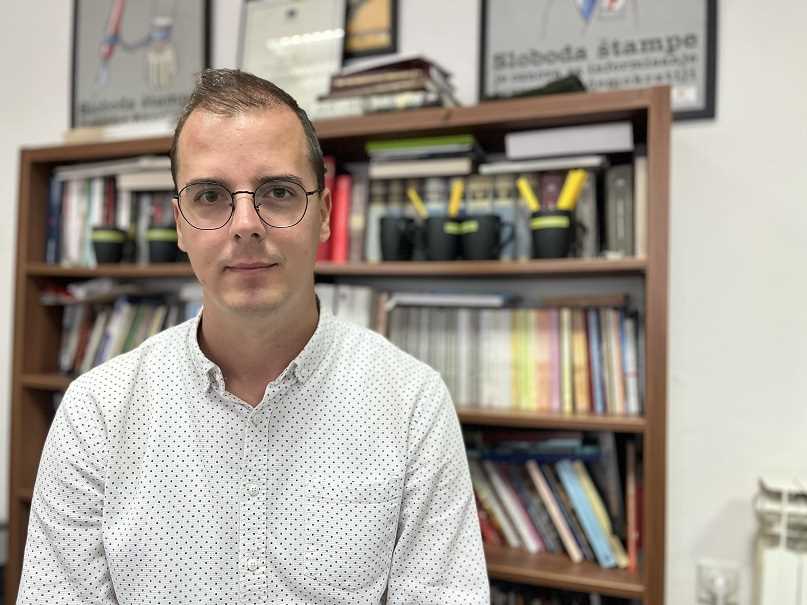
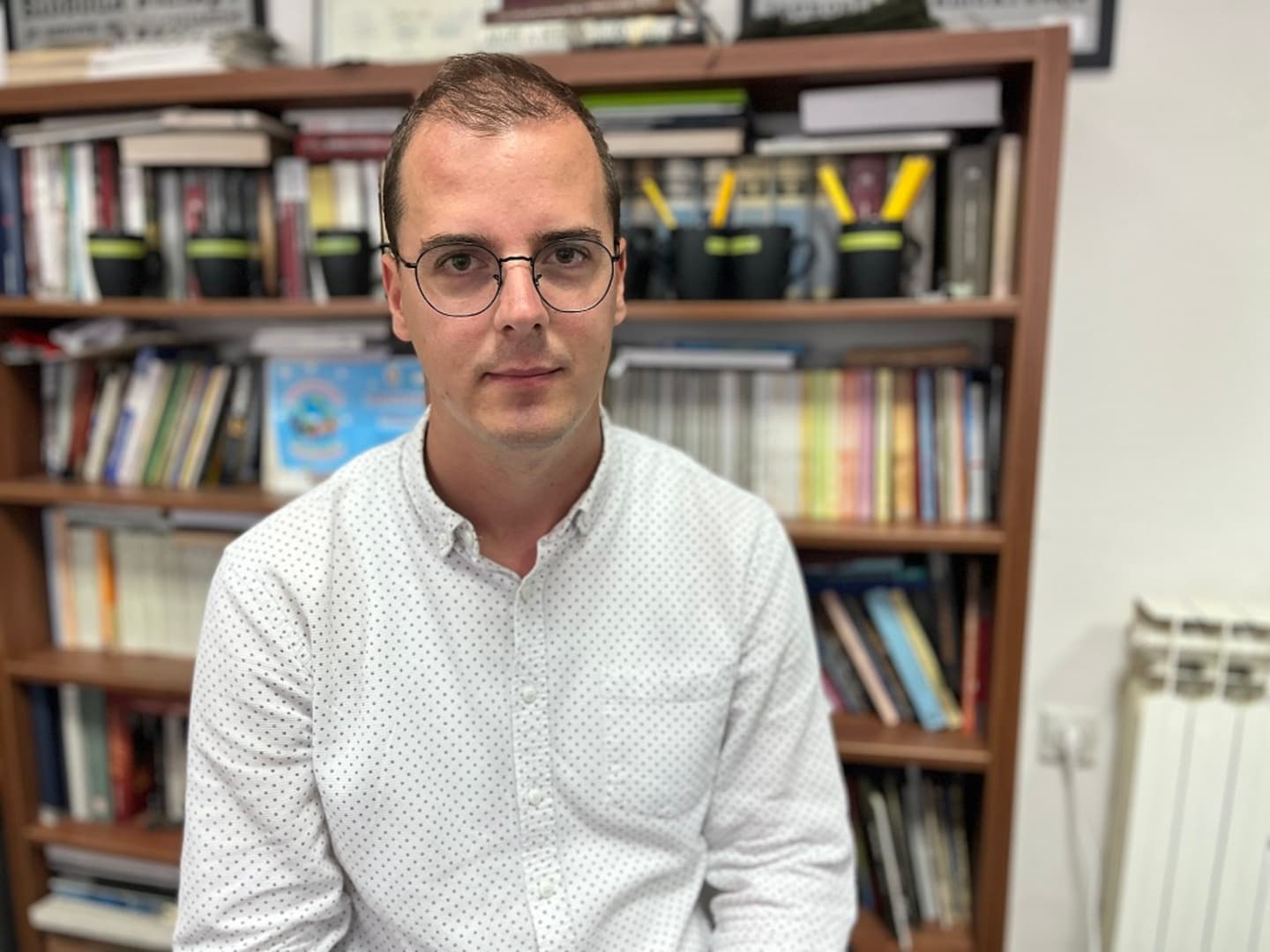
Mladen
Vujinović has been in journalism for 10 years. His first experience began as a volunteer,
and then as a journalist, reporter and presenter at the Public Service of
Republika Srpska. For the last two years, he has been employed as a reporter at
TV N1. Vujinović reports on current, everyday stories from the Banja Luka
region and its surroundings in a particularly responsible and creative way,
which makes him recognizable and authentic. He is frequently the subject of
attacks, labeling and name-calling by politicians, most often the President of
Republika Srpska Milorad Dodik. For Politicki.ba, he talks about freedom in
journalism, pressures and other topics.
Politicki.ba: What is it like to be a
freelance journalist in Republika Srpska, and what problems do freelance
journalists face?
- Thank you for this "free journalist" and for having this perception of me. I can truly say for myself that I am free, but I would not dare to say that I am rare or exceptional because of it. First and foremost, that is because everyone's perception of freedom is different. Thus, we will often meet colleagues who work in media, for whom it is widely believed that they are not free, but nevertheless that colleague will try to convince us of their freedom. And I respect that - just as I respect the choice of how my colleagues each approach and do their work, as long as that work is not to the detriment of the public and as long as that work does not constitute deception. But, to return to the question - the more mature I am, the more inclined I am to the opinion that the perception of freedom is directly proportional to the level of one’s income, and this logic of mine leads to the conclusion that there are few free journalists in our society, for the simple reason that journalists are not adequately paid for their work. I would like to use the opportunity to recall the information from 2020, which reads: "The average journalist's salary in Bosnia and Herzegovina is below the average salary in the country". And that is devastating and it is the reason for the low perception of freedom. Many preconditions are necessary for freedom in this society, and a stable and sufficiently high income that is used to meet personal needs is certainly one of the preconditions. Of course, this does not mean that we would then have ideal media if all of my colleagues had high salaries, but competition would increase with that, and I think that the quality of content would also increase, simply because the range of possibilities would be greater. And I can say this from my own experience, without stable working conditions I would hardly be able to consider myself free, and I am not sure that my employer would be able to deal with the different types of pressures, which of course I know nothing about, but I am convinced are happening "behind the curtain". I believe that they do happen, from the experience I have, which comes from working for another employer.
(Check his video statement HERE)
Politicki.ba: What kind of pressures
are we talking about?
- These
pressures are mostly political, yes, but they go hand in hand with economic
ones, because it is clear that domestic economic processes are governed by
politics and it is a vicious circle from which media with weak means of
financing can hardly get out. Maybe what I'm about to say won't be a popular
opinion, but I think the reason for that is the increasing competition on the
media market. The media space has been
oversaturated for a long time and the regional saying "A small pond full
of crocodiles" really applies to it. The only problem is that the pond has
dried up, and the crocodiles have become stunted and are no longer that
dangerous, so they are easy to manage. In return, the public did not gain
anything from this oversaturated media market. If we look at things as a whole,
of course, we cannot say that we have free media, quality media content and a
well-informed public. We can only say we have too many small media which are dependent
on mostly political factors, who completely openly expect absolute servitude. And
then we come to the key question, who are the media that offer freedom to their
journalists and objective, verified and comprehensive information to the
public? The answer is those who have stable sources of funding. Apart from them,
we also have those small-but-big heroes who create miracles with their personal
enthusiasm, and as a rule, with a small number of employees. It is clear that I
put them aside and now, while answering the question, spoke about the
mainstream media. And I think that this is actually where the answer to the
question of what it is like to be a free journalist and what difficulties
freelance journalists face lies. It is about existence. You cannot expect
pertinacity, awareness of the importance of being able to report freely, and constant
encounters with danger, from journalists who work for average or minimum wage.
That's just not fair.
Politicki.ba: Do you feel like a
target or someone who has been labeled, since you are often the target of
government attacks and is the opposition prone to the same narratives?
- I have
different experiences both with the government and with the opposition. I have
been working in this profession for almost ten years; I have worked for media
that have created a perception of themselves as "regime" media, but
also for media that are considered "free". And when it comes to
labeling, there is no difference. Politicians label you if you are not to their
liking and that's just the way it is. It doesn't frustrate me, really. I
consider it something that simply comes
with this job. Journalism cannot be done seriously without engaging in
conflict. No one will like my report tonight, no matter how seriously it is
done and no matter how important the topic is. That's a fact. Should I allow
myself the luxury of being guided by someone else's perception of my report? Of
course not. The key thing for me is the
perception of the public who will consume the content I create. As long as the
public perceives that my report is comprehensive, complete and of high quality,
I am satisfied. The politician’s perception really does not affect me. It will
sound like generalization when I say that the government and the opposition are
the same. They are, if we talk in general about the fact that both are prone to
labeling. But one should be honest and say that in both groups we have
individuals who deal well with questions that, from their own perspective, are
not easy to answer. Nevertheless, these honest individuals answered each of
those questions without a single ugly word addressed to the journalists.
Politicki.ba: Does it ever get to be too
much, and how do all these attacks affect your family?
- When it's too much for me, I'll probably change something - either the environment or the job. Today, the world is truly generous, and the possibilities are numerous. There are so many jobs and every day new vocations and new occupations arise. I would never want to be bitter about a choice that I made and just come to terms with it. Therefore, the first moment I feel that this is not it anymore, I will change something. Until then, I'm set. When it comes to my family, I don't tell my parents about those petty squabbles with politicians. For the simple reason that I think it would be difficult for me to convince them that they have nothing to worry about.