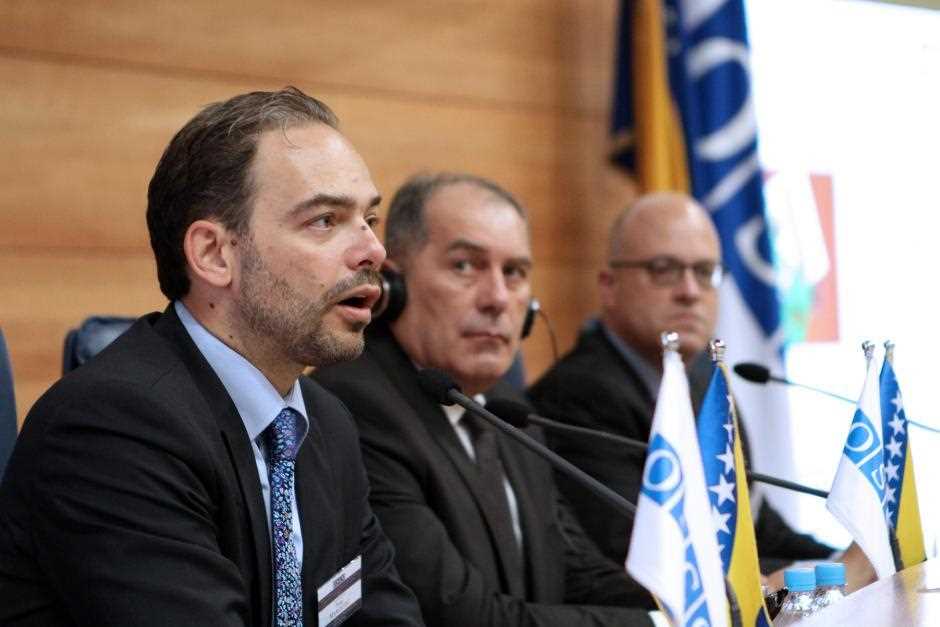
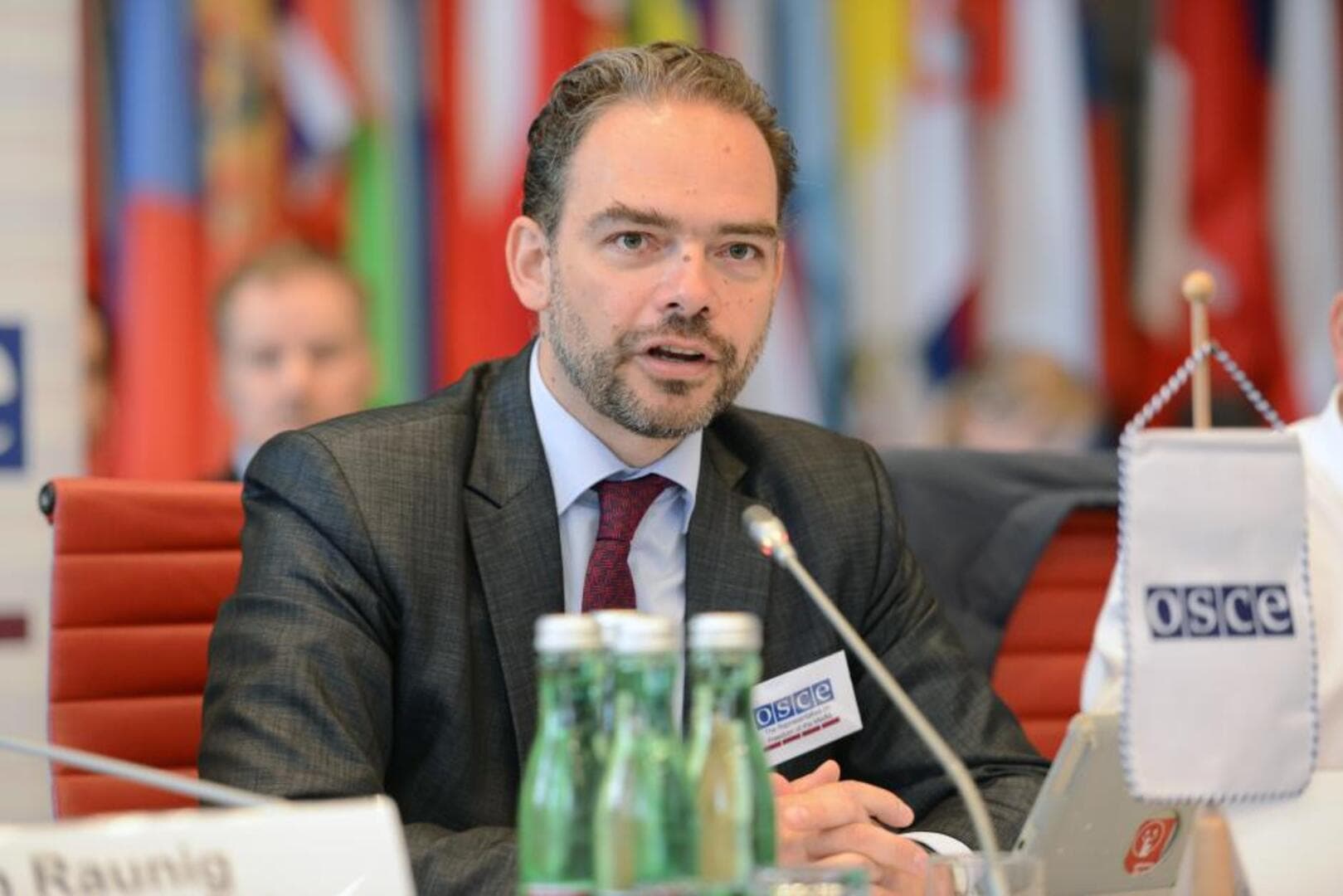
Frane Maroević has an extremely rich experience of living and
working in Bosnia and Herzegovina and the surrounding region. He was an
official in the International Community in our country, he also worked as a
spokesman for the Office of the High Representative as well as the EU Delegation in Bosnia, and he
was also the head of the OSCE and a representative of that multinational
organization for media freedom.
He is now the director of the International Press Institute (IPI). IPI is the oldest international organization advocating free media.
How do you see the state of media freedom in Bosnia and
Herzegovina? What are the biggest problems you have noticed?
- In the
last few years, the situation has been getting worse. Laws are being changed to
prevent media freedom and freedom of access to information. Threats and attacks
on journalists are becoming more frequent, leading politicians like Milorad
Dodik to regularly threaten and insult critical journalists, especially women.
The economic situation in the media is becoming increasingly difficult to
manage, institutions such as the Communications Regulatory Agency are under
political influence, the public broadcasting system is collapsing because there
is no progress in its establishment.
The
latest negative move is the amendment of the Criminal Code in Republika Srpska,
where defamation is reinstated as a criminal offense. Bosnia and Herzegovina
decriminalized defamation 20 years ago and was the first country in the region
to do so. So this is a retrogressive move that opens various possibilities of
pressuring journalists. In general, the criminalization of defamation is
contrary to international norms for freedom of speech, and this is the position
of all organizations working on human rights. I recently had the opportunity to
meet with journalists, lawyers and activists from Republika Srpska in Vienna.
They confirmed to me the negative elements of this law.
Although
the Law does not call for imprisonment, the fines are relatively high and of
course, if you are unable to pay, a prison sentence is possible for failure to
pay the fines. The definition of defamation is subject to wide interpretation
and leaves the possibility of political influence and pressure. Also, this Law
can theoretically be applied to the rest of Bosnia and Herzegovina and beyond
its borders, because everything that is published on the internet is of course
also accessible in the Republika Srpska. I don't see any other reason for this
law other than pressure that can be exuded on the media and journalists. We
already have plenty of examples where politicians and public officials
throughout Bosnia and Herzegovina use civil law and lawsuits to intimidate
journalists, so the criminal law in Republika Srpska gives them one more and
very powerful tool for pressure.
I also took
notice of the difficulty of free access to public information. Bosnia and
Herzegovina used to be at the very top in this sector, and today the laws on
free access to information, which are intended to provide information to
citizens and journalists, are less and less applied. Institutions often ignore
requests and do not respond to inquiries and protect private instead of public
interests.
The
Communications Regulatory Agency, which was once a model for regulatory
institutions in the region and Europe, is now under political leadership and is
making decisions that have more to do with politics than with regulation of
this key sector. The best example of this type of action is the recently
imposed disproportionately high sentence against Senad Hadžifejzović.
Physical,
verbal and online attacks and threats by politicians such as Milorad Dodik, who
again these days publicly threatened and called for violence against
journalists from Buka, BN TV, Capital and N1 television, are becoming more and
more common. His goal is to create a hostile environment for critical
journalists, which also leads to security threats. There are calls for lynching
which are leading to citizens threatening journalists themselves, attacking
them or their property, and in this way a very negative atmosphere is created
for media freedom and freedom of speech.
The
economic situation for the media is getting worse, which is unfortunately also
a global trend. However, in Bosnia and Herzegovina the advertising sector is
politicized and it is clear that in many cases, politically eligible media
receive large marketing budgets of public companies. The media, which suffered
huge financial losses due to the COVID pandemic, have become increasingly
dependent on public funds that are under political control.
I would
also like to point out the currently catastrophic situation in the public
media. The situation is worse than in 2010, when I left Bosnia and Herzegovina
for Vienna. BHRT is constantly threatened with collapse due to non-compliance
with the law from 2003. The boards of directors of all three broadcasters are increasingly
prone to political influences, and RTRS has long been clearly inclined towards
political leadership.