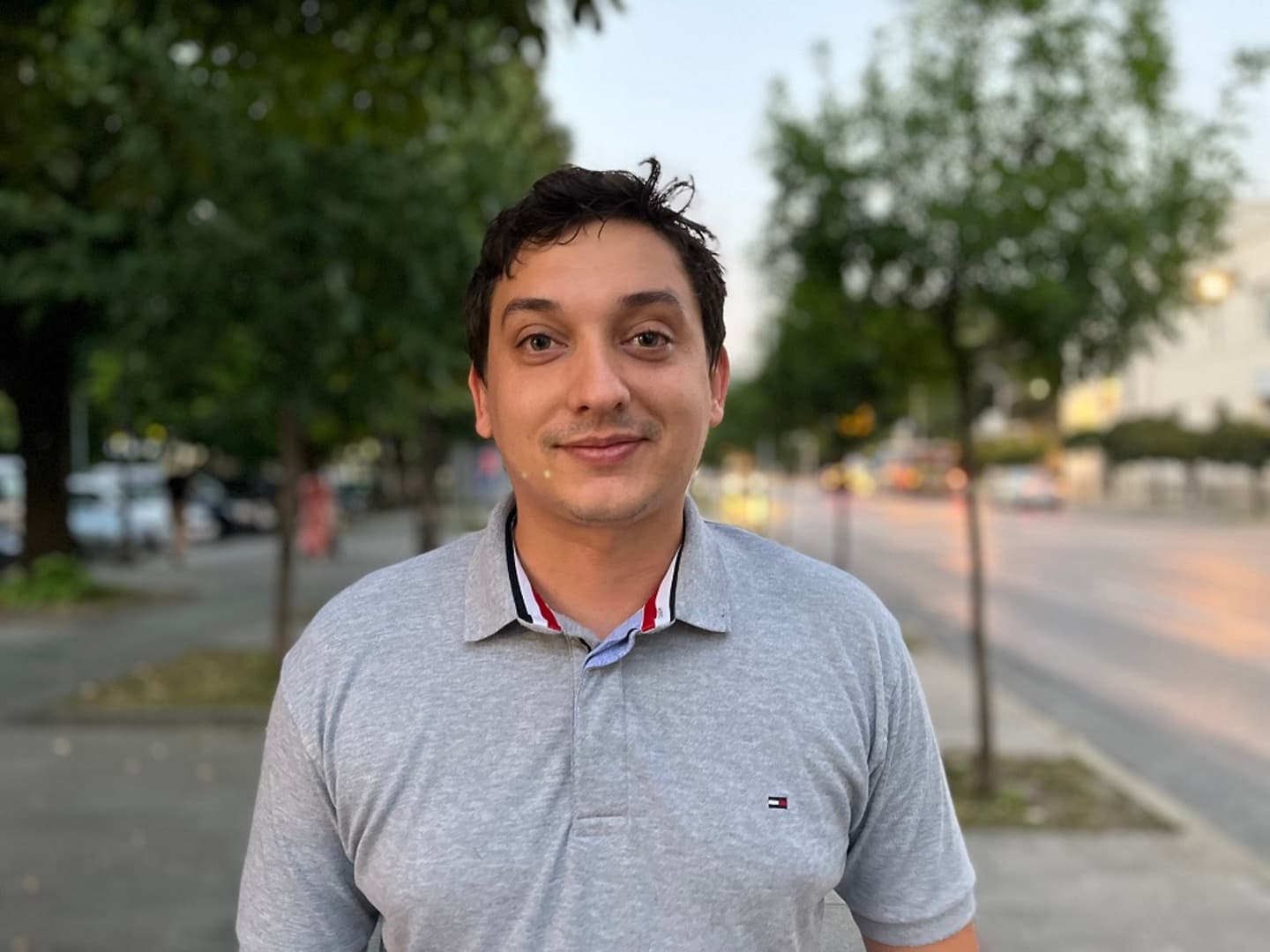
Those who continue to be critical, especially towards the authorities in the RS, will find themselves in a criminal-legal process that will not be easy at all.
Defamation
is a criminal offense in Republika Srpska as of today, and after several months
of appeals, journalists failed to convince the legislature to abandon the
criminalization of defamation, which will threaten not only the work of independent
journalists, but the freedom of speech of all citizens.
We talked
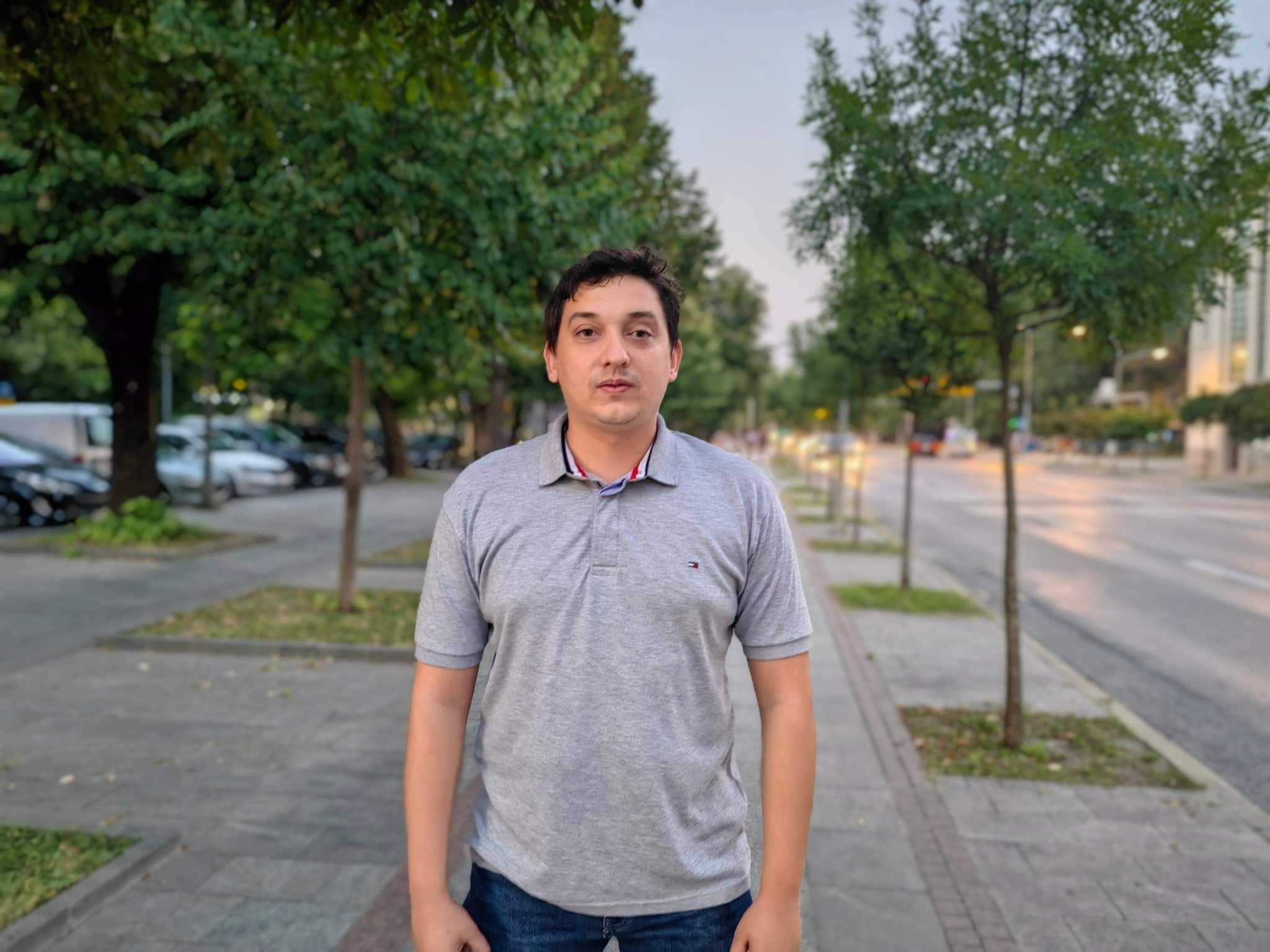
about this and other topics with journalist Stefan Blagić. He was born in 1991
in Tuzla, graduated in political science by vocation, he has been the president
of the "Restart Srpska" citizens' association since 2017, and is also
an investigative journalist. He was the winner of the award for the best
investigative story on corruption in 2021. He speaks three foreign languages.
At the
beginning of the interview for Politički.ba, Blagić said that the beginning of
the application of the law criminalizing defamation will automatically mean
that a part of journalists and the media will stop publishing content that can
potentially compromise them, or more precisely, because of which they can be
targeted by the Criminal Code of the Republika Srpska in any way.
“Those who continue to be critical,
especially towards the authorities in the RS, will find themselves in a
criminal-legal process that will not be easy at all, considering that there will
be uneven legal practice among prosecutors and judges in the first few years
without any doubt", said Blagić.
He believes
that the journalistic community did not put up enough resistance, because the
law was passed.
 "I would like to take this
opportunity to praise all the journalists, but also the citizens, who fought
any way they knew how and were able to, however, it is clear to everyone that
the resistance had to be incomparably stronger and more precise, in order to
achieve the withdrawal of the law. It's easy to be a general after the war is
won, true, but this should also be a lesson to us that in the future we have to
stand up and fight more strongly as a society against senseless and bizarre
laws, laws that cause violations of human and other rights. "Democracy
must be fought for every day, because the goal of every government is to stay
in power and use almost all means for that goal," says Blagić.
"I would like to take this
opportunity to praise all the journalists, but also the citizens, who fought
any way they knew how and were able to, however, it is clear to everyone that
the resistance had to be incomparably stronger and more precise, in order to
achieve the withdrawal of the law. It's easy to be a general after the war is
won, true, but this should also be a lesson to us that in the future we have to
stand up and fight more strongly as a society against senseless and bizarre
laws, laws that cause violations of human and other rights. "Democracy
must be fought for every day, because the goal of every government is to stay
in power and use almost all means for that goal," says Blagić.
This law, he
adds, sufficiently complicates the already complicated and ungrateful position
of journalists in Bosnia and Herzegovina.
"Nevertheless, those journalists
who serve the regime will, I'm sure, have a much more privileged position and
it will be much easier for them, which does not mean that journalists should
change sides and become party propagandists, but quite the opposite - that they
should remain journalists in the full sense of the word", said Blagić.
During his
career, our interlocutor was physically attacked, detained, arrested... We
asked him how it all affected him and if he ever thought of giving up the
fight.
You can watch Stefan's short statement HERE
"It affected not only me, but
also my family. Unfortunately, some people give in under pressure, which is
normal, but I have not given in, nor do I plan to. The fight for justice
belongs to privileged people with integrity, and no matter how paradoxical it
sounds nowadays (because people in positions are considered privileged), I will
always be of the opinion that freedom and the possibility of thinking for
oneself, not for the party's head, is in fact a privilege that I would never
give up. That's my answer, I won't give up, no matter what happens in the
end...” answers Blagić.
During his
career as a journalist and activist, he encountered numerous pressures, but the
biggest problem, he told us, was the unscrupulous police officers who
unlawfully deprived him of his freedom, and against who, according to his
lawsuits, the court always pronounced criminal verdicts "with one great,
enormous satisfaction.”
"The
lawsuits of controversial businessmen who sued me because of my articles were
also a problem, but these lawsuits also ended in my favor. At least in my case,
justice was usually served. However, this is not so important because the same
criteria are not applied to everyone and those who are not protected by the
media end up having a hard time waiting for justice. I stand for the fact that
justice is a national treasure, not Milorad Dodik, so in that sense I can't say
that there is any huge progress, although I do see it in a certain dose.
Unfortunately, it is only a “single dose and is not enough for the patient to
survive the course of the disease”. The medication must be used
regularly", adds Blagić.
The methods
of his struggle are different, and besides fighting for a better Bosnian
society with pen and written word, he has repeatedly filed criminal charges
against irresponsible public office holders. He says he doesn't even know how
many criminal charges Restart Srpska has filed. However, he remembers how many
convictions there were - none.
"Unfortunately,
there has been no epilogue until now, although I had information that the
prosecutor's office in some cases, even if it was fabricated, was conducting an
investigation. However, criminal charges should still be filed, because one day
this government will be a thing of the past, so prosecutors and judges will decide
to take the sacred charges out of the drawers," advises Blagić.
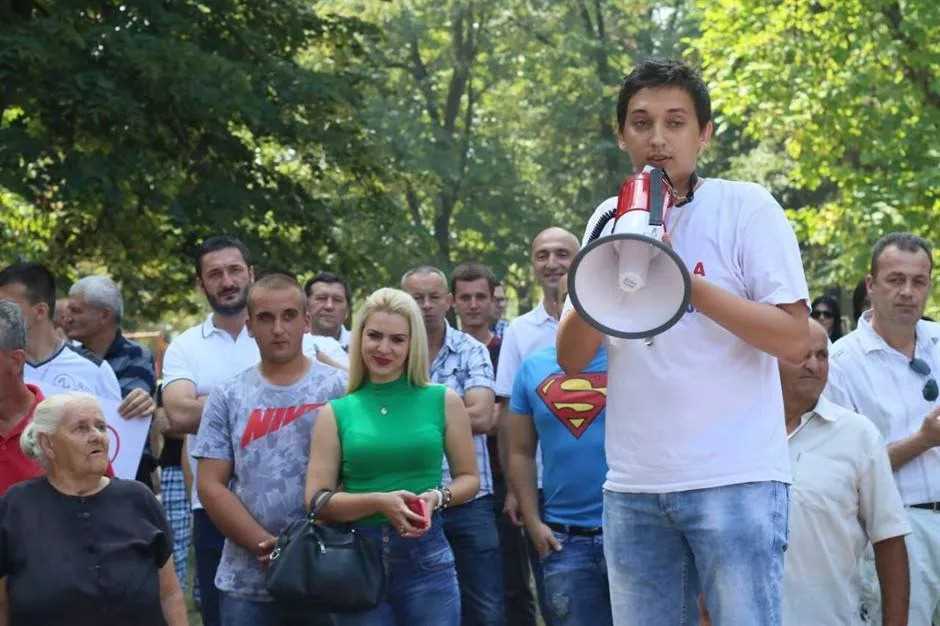
He also
organized protests several times, which were sometimes successful and sometimes
not.
"Nevertheless,
protests are something you cannot do alone; citizens must help you, because all
this is done for the sake of the citizens of the RS and Bosnia and
Herzegovina." In Banja Luka, the citizens are disappointed, because even
the most massive protests, such as “Pravda za Davida” and the opposition's
protest over the stolen elections, did not bear fruit in the end. Therefore, I
somewhat understand the citizens' lethargy at this moment," concludes
Blagić.

The article was realized as part of the Transition program of the Government of the Czech Republic and with the financial assistance of the Embassy of the Czech Republic in Bosnia and Herzegovina @CzechiainBiH. The content reflects the views of the interlocutors who are the choice of the editorial staff of Politicki.ba and do not necessarily reflect the views of the Czech government.