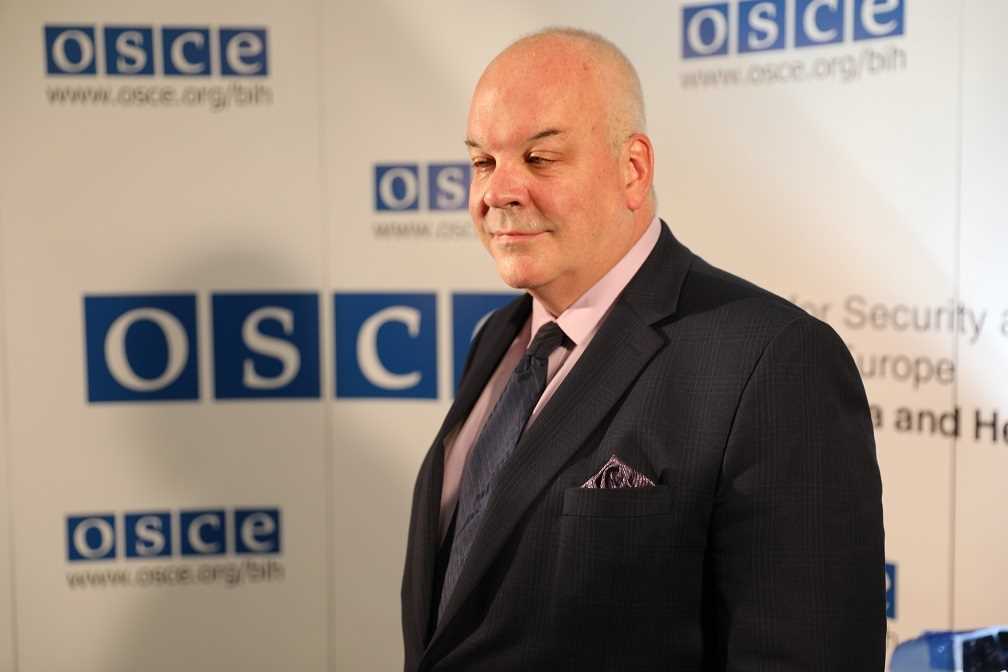
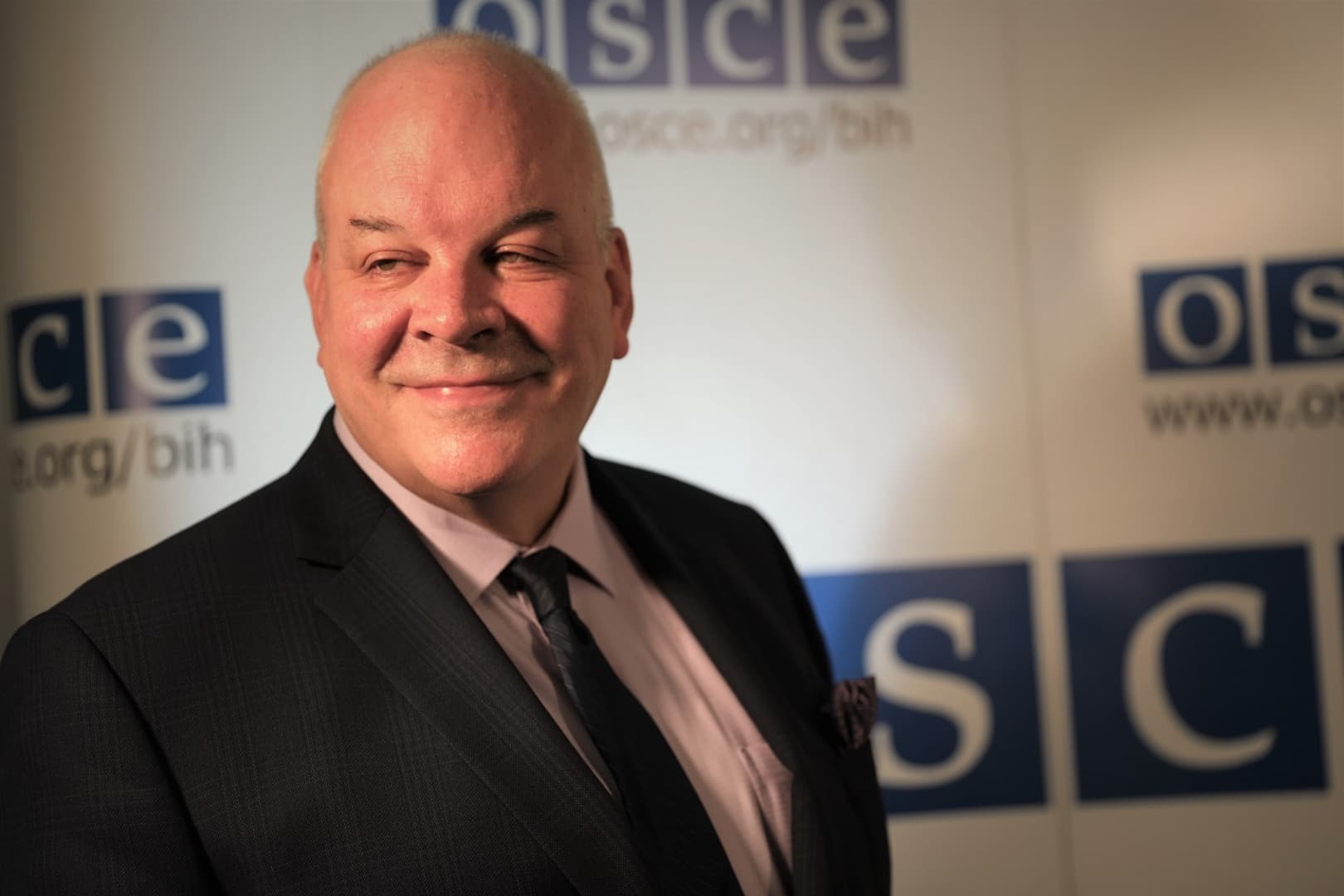
Ambassador Brian
Aggeler, head of the OSCE Mission in Bosnia and Herzegovina, in an interview
with Politicki.ba, warns that journalists in our country are working in
increasingly difficult conditions.
Investigative
journalists are especially targeted, mostly by politicians who try to silence
them or influence their work with lawsuits that take up their time because the
judicial processes take a long time.
Aggeler also points out that the criminalization of defamation in Republika Srpska represents a big step backwards.
How do you see the
state of media freedom in BiH and what are the biggest problems you have
noticed?
- My
greatest concern pertains to the personal security of journalists and media
practitioners in Bosnia and Herzegovina. Our human rights team has already documented
45 instances of attacks and incidents involving journalists since the beginning
of this year. This is a substantial increase compared to the previous three
years, signifying an alarming trend. Not only has the frequency of these
incidents risen, their severity has also escalated. We saw a series of attacks,
including against the property and equipment of journalists, coercive attempts
to unveil confidential sources, explicit expressions of hostility and clear
calls for violent actions by public officials.
In the midst of security challenges, journalists are
also increasingly challenged legally. Public officials are using something
called Strategic Lawsuits Against Public Participation to silence journalists.
This means they make journalists fight long legal battles with high costs with
an aim to stop them from doing investigative journalism and incur financial
burden upon their media outlet. Our analysis from 2020 found that more than 80%
of defamation cases against journalists and media between 2016 and 2019 were instigated
by public officials.
We
expect that the reinstatement of defamation as a criminal offense in Republika
Srpska will adversely impact journalistic endeavors and the principles of
freedom of expression and media. This regressive step threatens to impede the
daily work of journalists. It will constrain their ability to incorporate
documentary evidence or visual materials in investigative reports, and restrict
coverage of political figures’ familial improprieties, among other topics. Unfortunately,
our arguments against this move did not resonate with the leadership of Republika
Srpska. On the contrary, such opposition seems to have spurred the pursuit of
additional restrictive legislation exemplified by the introduction of the
so-called Foreign Agents Law and announcement of the Media Law in RS, which is
something my team will be following closely.
What do you think
and what do you recommend to be done to eliminate these problems?
- The Mission, along with the OSCE Representative on
Freedom of the Media, is committed to helping BiH improve its media scene. This
commitment extends to all tiers of media and encompasses journalists across the
spectrum, with a particular emphasis on independent and investigative outlets
that address issues of public concern, such as corruption, transitional
justice, and human rights.
To
confront the persistent safety challenges that impede media freedom in BiH, we
believe a comprehensive approach involving the judiciary and law enforcement is
imperative. It is crucial to bolster the capabilities of these institutions. We
are actively supporting BiH authorities in fulfilling their obligations as noted
in the OSCE Ministerial Council Decision on
Safety of Journalists. This includes the implementation of an
effective protection mechanism designed to address attacks and threats against
journalists with greater efficiency. In co-operation with the Sarajevo Canton
Prosecutor’s Office, we already managed to establish a contact point for
safety of journalists, which has already yielded positive
outcomes. Recently, we have further strengthened our collaboration with the European Union
Special Representative in BiH, and in alignment
with recommendations from the High Judicial Prosecutorial Council of BiH, we are
now collectively aiding BiH in achieving full compliance with EU Key Priority
12, pertaining to journalists’ safety.
We
will always support civil society organizations and independent media in their
advocacy efforts aimed at amending criminal legislation. The goal here is to
categorize attacks on journalists as attacks on official persons and this new
definition will enable prosecutors to more effectively address these attacks,
as numerous cases do not align precisely with the current stringent legal
limits of endangering safety.
In
the context of formulating new laws or amending existing ones, we believe a
robust, honest and inclusive public discourse is needed. Such a process should
encompass the participation of all relevant stakeholders including civil
society, media and academic community, thus accommodating a diverse range of
perspectives and experiences.
Lastly,
I would like to emphasize the importance of provision of free legal aid to journalists
as it offers them access to legal expertise that can help them with the legal
challenges they encounter, such as Strategic Lawsuits
Against Public Participation, etc. This assistance safeguards press
freedom by empowering journalists to uphold their rights and navigate the
intricate legal landscape.