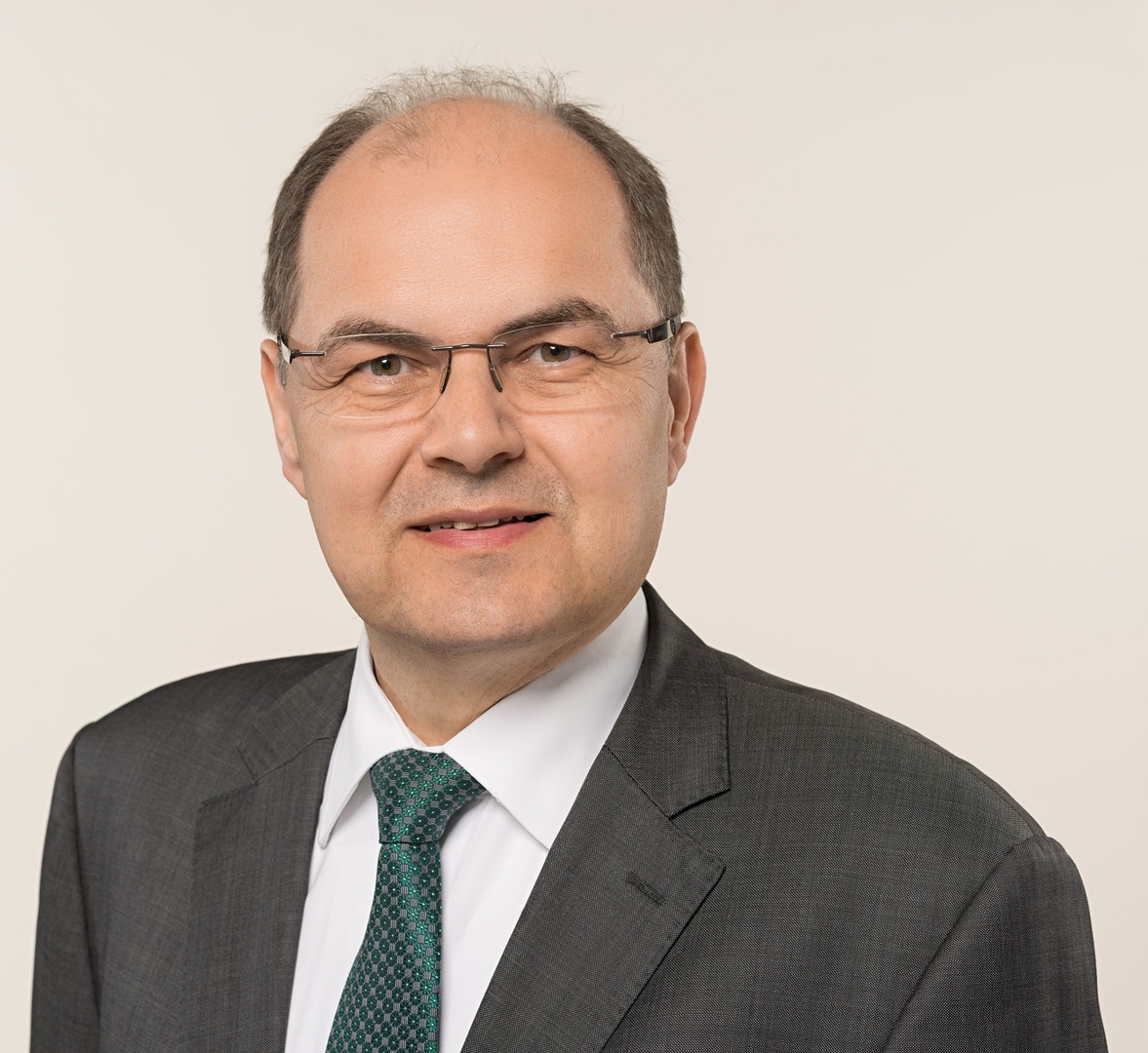
By: Sead Numanović
Since October 2020, Germany has been working hard to
replace Valentin Inzko, Austrian diplomat serving as High Representative for
Bosnia and Herzegovina. According to currently available information, his place
should be filled by Christian Schmidt, a politician of the Christian Social Union
(CSU), a conservative German political party. Angela Merkel and the political establishment
of her Christian-Democratic Union (CDU) regards the former agriculture minister
of Germany and CSU’s “minister of foreign affairs” as the most suitable candidate
for the highest-ranking post within the Office of the High Representative
(OHR).
At the same time, Berlin’s ambition is to revitalize,
strengthen, and – if needed – to make OHR’s role more robust in implementing the international community’s policies in Bosnia and Herzegovina. According to
media reports, Germany has somehow managed to convince Russia to accept this
plan. It is, however, uncertain whether the administration of the newly-elected
U.S. President Joe Biden will play along. Biden’s team has not yet come forward
on this issue, and our Capitol Hill sources tell us Biden will remain silent at
least until he is inaugurated on January 20, 2021. Only then will we confidently
know more.
German officials are quiet, too. They have been skillful
in avoiding to address a growing number of questions related to this topic.
Both the domestic and international media are curious if the deal with Russia
is more than just a rumor, and if not – what does it entail for Russia? How did
the Russians get from abolishing the OHR to supporting the appointment of a new
High Representative? What will Russia get in return for this favor? In a brief
statement for Politicki.ba, Christian Schmidt was more than secretive,
suggesting us to seek for more information from the official institutions.
What we know so far is that Schmidt is neither the best nor the most desirable candidate for the new High Representative post. In
Germany, he is not even close to the top tiers of the country’s political
establishment as his ministerial career did not end in a blaze of glory.
Reportedly, his English is rusty, and in the Balkans, he is affiliated with
notorious personalities and dubious awards he received.
One of the big stains on his political career is certainly the Ante
Starčević Order, a Croatian national decoration he formally received last year from
the Prime Minister of Croatia, Andrej Plenković. A number of people accused
with war crimes and convicted war criminals, including Jadranko Prlić, are
among the recipients of the Ante Starčević Order.
Therefore, Danke Deutschland, aber nein, danke. Schmidt
should stay exactly where he is, as we wish him the best of luck, but Bosnia
and Herzegovina needs someone who is better for the position of High
Representative. Taking into consideration the current situation, Valentin Inzko
seems to be a much better option!